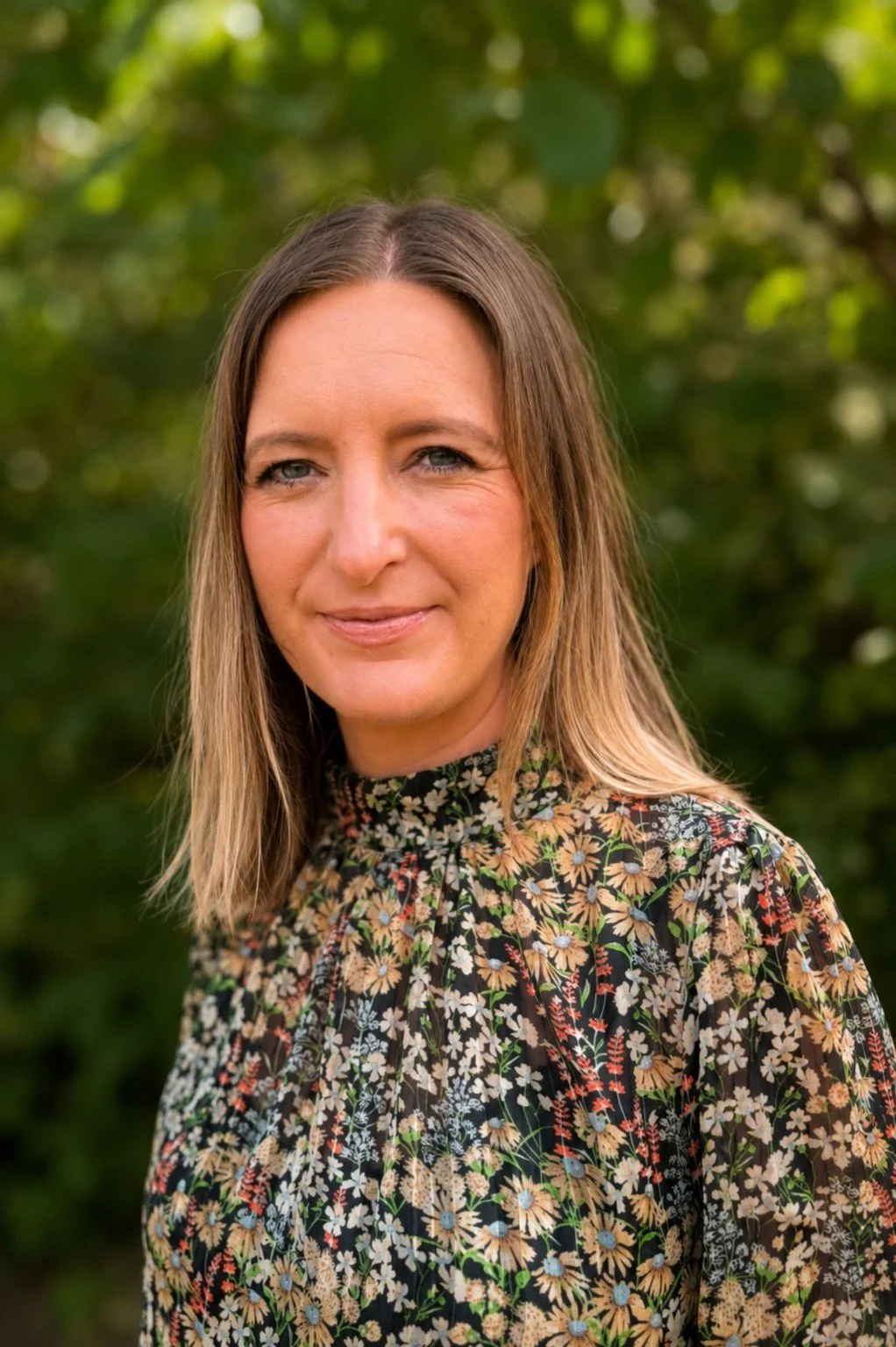
I’m Cassie, a BABCP-accredited Cognitive Behavioural Psychotherapist supporting adults experiencing a range of emotional difficulties.
Based in Sheffield, I offer online therapy across the UK. I provide compassionate, evidence-based CBT tailored to each person’s individual needs.
My aim is to provide a warm, collaborative space where we can understand what’s been keeping you stuck and work towards meaningful, lasting change.
Welcome.
The therapies I offer
-
CBT is a practical, evidence based therapy that helps us understand the links between our thoughts, emotions, physical sensations and behaviours. Together we’ll identify the patterns that may be keeping you stuck and develop practical strategies to help you move forward.
CBT can be particularly effective for anxiety disorders, Obsessive Compulsive Disorder (OCD), depression, low self-esteem and trauma-related difficulties. I tailor CBT to your individual needs rather than using a one-size fits all approach.
-
Internal Family Systems (IFS) is a compassionate approach that helps us understand the different ‘parts’ of ourselves. You might recognise an anxious part, an inner critic, or a part that wants to protect you.
Rather than trying to get rid of these parts, we become curious about them, helping them feel understood and allowing lasting change to happen in a gentle way. I often integrate IFS alongside CBT where it feels helpful.
-
Eye Movement Desensitisation and Reprocessing (EMDR) is an evidence-based therapy developed to help people recover from traumatic or distressing experiences.
EMDR helps the brain reprocess memories that continue to feel emotionally ‘stuck’, reducing the distress they cause. From November 2026 I’ll be offering EMDR alongside CBT and IFS where appropriate

My approach
Cognitive Behavioural Therapy (CBT) forms the foundation of my work. CBT is a well-established, evidence-based therapy that helps us understand the links between our thoughts, emotions, behaviours and physical responses, and how these patterns can keep us stuck. Alongside CBT, I have completed training in Internal Family Systems (IFS), which I may draw upon where appropriate and always in line with your individual goals. From November 2026 I will also be offering EMDR therapy. I also draw on Compassion-Focused Therapy techniques, as well as those found in Acceptance and Commitment Therapy.
My aim is to offer a compassionate space where you will be met with warmth and curiosity, to be fully heard and understood, with a view to equipping you with tools for lasting change.

How I can help

-
I have a particular interest in supporting people who are recovering from high-control religious environments and/or spiritual abuse, navigating faith transitions, or rebuilding identity and confidence after leaving a religious community (please scroll down for specific information about what I offer in this respect).
-
Post-traumatic stress disorder (PTSD) is a lasting stress response triggered by experiencing or witnessing a terrifying event. It keeps your nervous system trapped in "survival mode," causing distressing symptoms like flashbacks, nightmares, and severe anxiety.
Cognitive Behavioural Therapy (CBT)
CBT focuses on the connection between your thoughts, feelings, and behaviours. It helps you recognise how trauma has distorted your belief systems and gives you practical, everyday tools to challenge negative thoughts and reduce avoidant behaviours.
Eye Movement Desensitisation and Reprocessing (EMDR) (from November 2026)
EMDR uses bilateral stimulation (such as guided eye movements or taps) to help your brain reprocess stuck traumatic memories. It bypasses talking therapy to naturally dull the painful emotional charge attached to your past experiences.
Internal Family Systems (IFS)
Internal Family Systems (IFS) views your mind as an ecosystem of distinct "parts," some of which carry the pain of past trauma while others work to protect you from it. Rather than fighting your symptoms, IFS helps you access your calm, core "Self" to safely listen to, comfort, and unburden these wounded inner parts.
IFS can work well in combination with EMDR, in particular.
-
"Small t" trauma refers to distressing personal experiences that exceed your ability to cope, even if they aren't immediately life-threatening. While less obvious than major disasters, repeated events like bullying, a difficult breakup, emotional neglect, or chronic financial stress accumulate over time, leaving you feeling stuck, anxious, or unworthy.
We use tailored, evidence-based approaches to help you process these subtle but deeply impactful wounds:
Cognitive Behavioural Therapy (CBT)
CBT helps you pinpoint the negative, core beliefs—such as "I am not good enough" or "I am unsafe"—that grew out of your past experiences. Together, we safely restructure these thought patterns to change how you react to triggers today.
-
Low self-esteem is a persistent negative view of your worth. It drives self-doubt, people-pleasing, and a harsh inner critic.
Through Cognitive Behavioural Therapy (CBT), we target the automatic thoughts fueling your insecurity. You will learn to challenge distorted self-judgments, quiet your internal critic, and rebuild balanced self-compassion.
IFS can help you understand the parts of you that carry self-criticism, shame or a sense of not being good enough. Rather than trying to silence these parts, IFS explores where they came from and what they may be trying to protect you from. Over time, this can help you develop a more compassionate, secure relationship with yourself, one that relies less on achievement, perfection or other people’s approval.
-
Depression can feel like a persistent weight that drains your energy, motivation, and hope. It creates a cycle of negative thinking that makes everyday tasks feel monumental and isolates you from the things you love.
Through therapy, we help you break this cycle by identifying automatic depressive thoughts, gently reintroducing rewarding daily activities, and incorporating techniques tailored to your unique journey, allowing you to reframe your outlook and reclaim your life.
-
Social anxiety is an intense, persistent fear of being watched, judged, or scrutinised by others. It can make everyday social interactions—like speaking in groups, meeting new people, or eating in public—feel overwhelming, often leading to isolation and avoidance.
Through therapy, we work together to understand the root of your social fears and quiet that anxious internal voice. By blending effective techniques from different therapeutic approaches, we help you challenge negative self-judgements, manage physical symptoms of anxiety, andgradually build the genuine confidence needed to engage comfortably in social settings.
-
Obsessive-Compulsive Disorder (OCD) is characterised by distressing, intrusive thoughts (obsessions) and repetitive actions or mental rituals (compulsions) performed to ease the resulting anxiety. This exhausting cycle can take up hours of your day, making you feel trapped by your own mind.
Through therapy, we work to break this cycle by helping you safely confront intrusive fears without relying on repetitive habits. By blending evidence-based techniques tailored to your needs, we support you in retraining your brain's alarm system, reducing the power of anxiety, and reclaiming yourdailyfreedom.
-
Health anxiety involves an intense, persistent worry about having or developing a serious medical illness. This often leads to excessive body-checking, reassurance-seeking, or constant online researching, which ultimately fuels a distressing cycle of physical symptoms and escalating panic.
Through therapy, we work together to quiet these overwhelming health fears and break the cycle of constant scanning and checking. By blending evidence-based techniques tailored to your needs, we help you manage physical anxiety symptoms, challenge catastrophic thoughts, and build a more balanced, peaceful relationship with your body.
-
Generalised Anxiety Disorder (GAD) involves a persistent, overwhelming sense of worry about everyday things, even when there is no clear reason for concern. This constant state of high alert can trigger physical exhaustion, muscle tension, restlessness, and trouble sleeping, making it incredibly difficult to find mental rest.
Through therapy, we help you quiet this background noise of chronic worry. By combining effective strategies from different therapeutic approaches, we work together to manage your physical stress, challenge cyclical "what if" thoughts, and help you find a sense of calm and control in your daily life.
Therapy for religious trauma, spiritual abuse and faith transitions

Perhaps some of this sounds familiar…
Leaving, questioning or changing a deeply held faith can affect far more than what you believe. Particularly within high-control religious communities, beliefs may have shaped your relationships, identity, choices, understanding of right and wrong, and even how safe the outside world felt.
For some people, questioning or leaving can mean losing not only a belief system, but a whole framework for understanding themselves, other people and the future.
You may be experiencing:
Fear, guilt or shame after questioning teachings you were once expected to accept as truth.
Difficulty trusting your own judgement after being taught to look to religious authority for answers.
Anxiety about making choices that previously came with clear rules, expectations or prescribed ways of living.
The loss, or threat of loss, of family, friendships and an entire community because your beliefs have changed.
Fear of judgement, rejection or shunning if you are open about what you now believe.
A sense that you are having to discover who you are outside the identity and role you were given.
Conflicting feelings towards people you love who remain within the religion.
Fear around death, Armageddon, punishment or what happens after death, even when intellectually you no longer believe what you once did.
Grief for experiences, relationships or opportunities you feel were lost while you were part of the religion.
Learning to tolerate uncertainty after living within a belief system that offered clear answers about what was true, what was right and what the future held. Not knowing can initially feel frightening rather than freeing.
When you have spent years being told what is true, what is safe, who can be trusted and how you should live, learning to trust your own mind again can take time.
Therapy can offer a space to explore what happened to you without telling you what you should believe next. Part of that process may involve learning to tolerate uncertainty and discovering that you don’t have to replace one set of absolute answers with another, and that not knowing can gradually become something you can live with.
You may want to leave religion behind completely, retain parts of your faith, find a different spiritual home, move towards another religion, or still have no idea where you will land. My aim is to offer a space where these questions can be explored with compassion and curiosity, within evidence-based psychological therapy.
What to expect
I believe that good therapy should empower you as a person, and should never feel instructive or prescriptive. While I use established, evidence-based approaches and techniques, I have no interest in pushing people to fit any particular agenda. My role is to work alongside you. I won’t tell you what to think or how to live your life; instead, therapy can help you explore what feels authentic and meaningful to you.
Above all, I strive to create a therapeutic relationship where you feel safe, heard and respected. I believe lasting change comes not from being ‘fixed’ by someone else, but from discovering your own strengths and developing the confidence to move forward independently.
I know that beginning therapy can feel like a big step, and that feeling able to trust your therapist and decide whether they are a good fit for you matters. Your first session is an opportunity to talk about what has brought you to therapy, what you would like to achieve, and to ask any questions about how I work.
From there, I’ll help you develop an understanding of the difficulties you’re experiencing and consider a way forward that feels right for you. Therapy is collaborative and can move at a pace that feels manageable, while supporting you towards the changes that matter most to you.
An inclusive and affirming practice
My practice is LGBTQIA+ affirming, neurodiversity-aware and committed to anti-racist and inclusive practice. I welcome conversations about accessibility and what you need to feel comfortable and supported in therapy.

About me
Outside of the therapy room, I’m happiest when I’m out walking in the Peak District, curled up with a good psychological thriller or gothic novel, spending time with my family and friends, and my cat, Bertie.
I love autumn days, the sound of rain and finding moments of calm in nature. I’m endlessly curious about psychology, personal growth and how people heal, which is probably why I never seem to stop learning.
I’m someone who values warmth, humour and authenticity. Therapy doesn’t have to feel clinical or intimidating, and while I take my work seriously, I don’t believe we have to be serious all of the time. I think laughter often has an important place in healing too.
Fees
Individual therapy - £80 per 50-minute session.
I offer a limited number of reduced-fee spaces for those who may otherwise find the cost of therapy a barrier. Please feel welcome to ask about this when you get in touch.
I offer a free 15 minute initial consultation, giving you the opportunity to tell me briefly what you’re looking for and ask any questions before deciding whether you’d like to book a first session.